A short guide to Salzburg
Salzburg sits on the northern edge of the Alps, a short train ride from the German border, and its baroque old town has drawn travellers for centuries. The city is compact enough to cross on foot in under an hour, though most people take far longer, stopping at every church door and arcaded courtyard. Music runs through the place: you'll hear a string quartet rehearsing through an open window on a Tuesday afternoon, and nobody nearby seems to find it unusual.
Mozart was born here in 1756, and the house on Getreidegasse where it happened is now a museum spread over three floors. I'm not sure which room holds the original family letters and which holds facsimiles, but the violin case in the corner is genuine. Every summer the Salzburg Festival turns the town into a stage for opera, theatre and orchestral concerts across several weeks, drawing performers and audiences from around the world. It's the sort of programme people plan a year around.
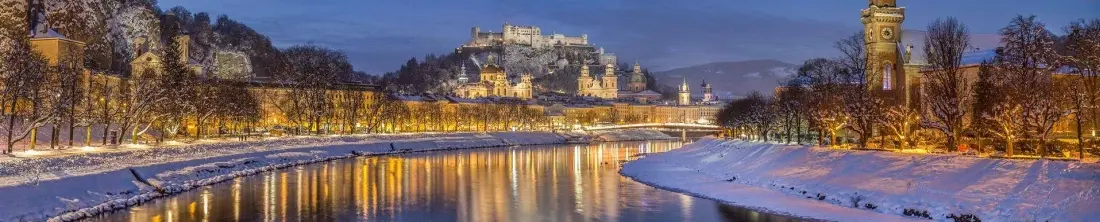
The UNESCO-listed old town is the heart of any visit. Hohensalzburg Fortress rises on Festungsberg hill above the rooftops, one of the largest and best preserved medieval castles in Europe, and the funicular gets you up there in about a minute. From the terrace you can see the Salzach curving north and, on a clear morning, the peaks of the Berchtesgaden Alps. Inside, the state rooms and the small marionette museum are both worth the entry.
Wandering the streets feels like stepping into a baroque painting. The Salzburg Cathedral, an early baroque masterpiece, has twin towers and a dome that catches the light late in the day. Residenzplatz and Kapitelplatz nearby open up into wide squares framed by grand facades and ornamental fountains. The Residenz Gallery upstairs holds a fine collection of European paintings. A morning passes quickly here.
The city has a young pulse too, largely because of its student population. Contemporary galleries, design shops and coffee houses sit comfortably beside old family businesses, and the mix keeps the centre lively. Mirabell Palace and Gardens, laid out from 1606, is where residents come to stroll among the flower beds and look back at the fortress. The garden's dwarf statues, sixteen of them along the path, are a favourite with children.
Nature stays close. The Salzach runs through the middle of town, with riverside paths for walkers and cyclists, and the lakes and mountains of the Salzkammergut are close enough for a day trip by bus or car.
Fans of The Sound of Music will recognise plenty: the gazebo from Sixteen Going on Seventeen, Leopoldskron Palace and Hellbrunn Palace all appear in the film, and guided tours cover them in an afternoon.
You're welcome to come for the concerts, the architecture or the alpine views, and the city offers all three within a few streets of each other. The festival programme for next July comes out in January.