The boat from Vaitape to the outer motu takes about twenty-five minutes, and the last ten of those are spent in water so clear you can watch the sand sharks move across the bottom.
You'll arrive at a wooden jetty with no front desk in sight. Check-in happens in a thatched pavilion with a cold towel and a glass of something made from local pineapple, and your bags go ahead of you by golf cart. Most of the exclusive 5* luxury beach resorts in Bora Bora work this way: no lobby, no queue, no paperwork until you're sitting down.
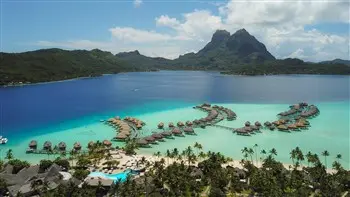
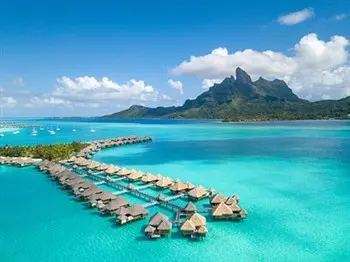
What separates the top tier from the merely expensive comes down to a handful of things you'll notice within an hour. The depth of the lagoon outside your deck. Whether the overwater bungalow faces the mountain or the open reef. How far the nearest other guest is at breakfast.
Overwater bungalows and what the categories actually mean
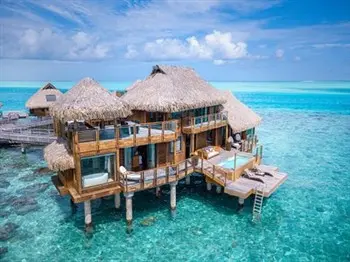
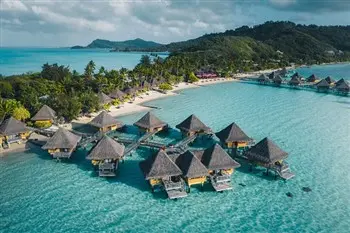
Almost every resort on the island sells an overwater bungalow, and the phrase hides a wide spread. A standard overwater villa sits on the inner lagoon with a ladder into waist-deep water. A premier category moves you out toward the reef edge, where the floor drops to eight or ten metres and the fish life changes completely.
You'll pay well over a thousand pounds a night for the better ones in high season, and considerably more for the villas with a private plunge pool on the deck. My rough figure of a thousand is out of date: rates at the more established properties have climbed past fifteen hundred for the top categories in July.
Between the two extremes sit the beach villas, set back among the palms with a small garden and a path to the sand. These tend to be quieter, and some guests prefer them. You lose the ladder. You gain about forty square metres of outdoor space and a good deal more privacy.
What's included, and what isn't
Half board is the sensible arrangement at most of these properties, because the restaurants are good and the nearest alternative is a boat ride away. Breakfast arrives as a buffet with a proper egg station and a table of tropical fruit cut that morning. Dinner is usually a set menu with a French accent and a lot of tuna.
Drinks are rarely included, and the wine list will test your resolve. Expect to sign for a glass of Sancerre at around twenty pounds. Transfers from the airport are handled by the resorts themselves, either by private boat or by a short helicopter hop across the lagoon, and the helicopter is worth doing once even if the boat is more civilised.
Snorkel gear, kayaks and paddleboards generally come free. Diving, spa treatments and the shark and ray excursions do not.
The properties worth knowing
Four resorts dominate the top end, and you'll find them listed across every serious guide to The Worlds Top Luxury Resorts.
- St Regis Bora Bora sits on a 44-acre estate with the largest overwater villas on the island, some running past 300 square metres. The spa is set on its own islet.
- Four Seasons Resort Bora Bora has the best view of Mount Otemanu from its overwater section and a lagoon sanctuary that functions as a natural aquarium. Its one-bedroom suites are the sweet spot.
- The Brando, on the private atoll of Tetiaroa, is a twenty-minute flight north and a different proposition entirely: 35 villas, no neighbours, and a bird sanctuary that the resort maintains rather than exploits.
- Conrad Bora Bora Nui occupies a hillside and a cove on the western side, with a two-level presidential villa that sits at the end of its own pontoon.
The St Regis and the Four Seasons both run children's clubs, which matters if you're travelling with a family and matters enormously if you aren't. Ask which weeks are quietest before you book.
The lagoon is the reason people come, and it rewards anyone willing to get up before seven.
When to go and how long to stay
May through October is the dry season, with daytime temperatures around 28C and a trade wind that keeps the humidity bearable. November to April brings rain, though usually in short heavy bursts rather than all-day drizzle, and the rates drop by a third.
Seven nights is about right. Four feels rushed given the journey, and ten days of resort life starts to pull. You'll want at least two full days with nothing scheduled.
A few practicalities
There's no need to change money at the airport. Everything goes on the room account and the exchange rate applied by the resorts is fair enough. Pack reef-safe sunscreen, because the local shops sell a limited range and charge accordingly.
The sun here is stronger than the latitude suggests, and the UV comes off the water as well as down from the sky. You'll burn on a cloudy afternoon if you're not careful. Linen shirts are more useful than you'd think, and a light rain shell helps on evenings between December and March.
I'd skip the jet ski tour of the island. It's loud, it's forty minutes of spray in your face, and you see less of the lagoon than you do from a kayak. The glass-bottom boat trip is better value and takes you out past the reef.
Your phone will work on the main island and patchily on the motus. Most resorts now have reliable wifi in the villas, so you can choose how connected to be. The pools are rarely busy before nine in the morning, and the water is warm enough for a swim at six.
One other thing worth knowing: the mountain, Mount Otemanu, disappears into cloud most afternoons and reappears at dusk. People gather on the western beaches to watch it happen, and nobody says much.
The airport gift shop sells black pearl earrings for about ninety pounds a pair.
The jetty lights come on at half six, and the reef fish gather under them by seven.