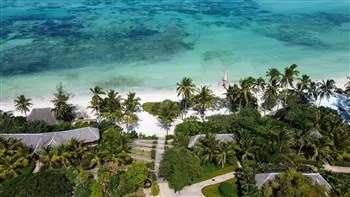
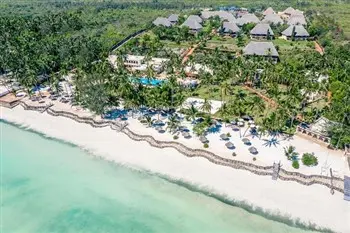
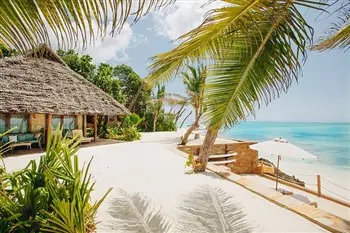
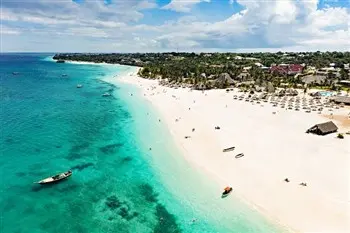
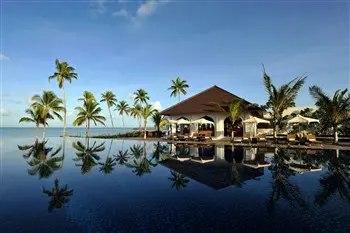
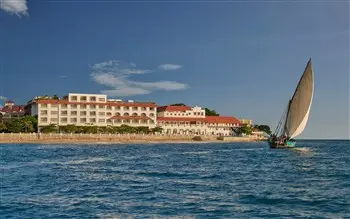

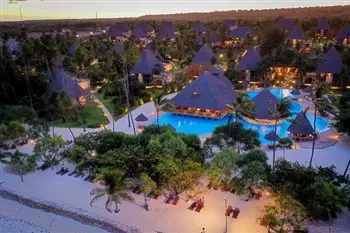
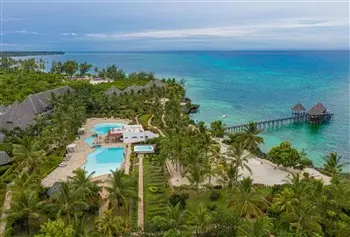

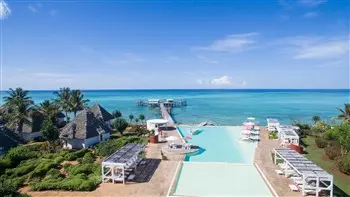
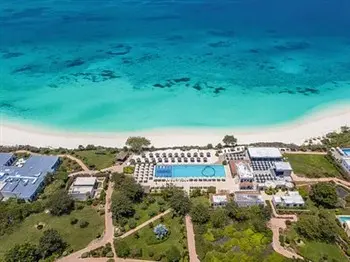
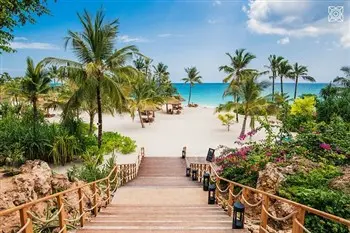
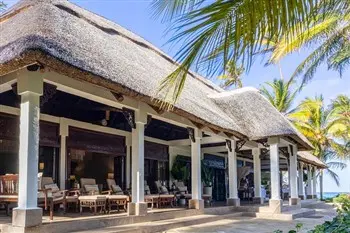
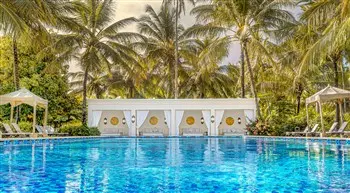
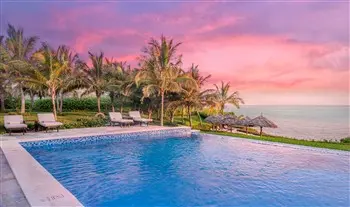
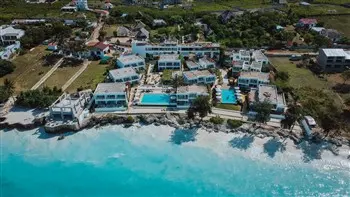
Zanzibar's east coast runs on tides, and the water pulls back about a kilometre at low tide, which surprises nearly everyone on their first morning. From your suite at one of the island's five star resorts, that expanse of wet sand looks less like a beach and more like a temporary plain. It comes back, of course. It always comes back.
You'll want to know where to base yourself. Tanzania's luxury beach resorts split across two coasts: Zanzibar, with its reef-sheltered lagoons and spice-growing interior, and the mainland shore around Pangani and Kilwa, quieter and harder to reach. Most travellers default to Zanzibar. The math is simple: a 90-minute flight from Dar es Salaam, then a transfer of an hour or less to the sand.
The reef side of the island
The northern beaches near Nungwi hold the clearest swimming water in the archipelago, because the reef sits close and the tide never retreats far. Resorts here tend to be larger, with dive centres attached and a house reef you can snorkel from the shore. Expect to pay from around $700 a night in high season for a beachfront suite, though $900 is closer to the mark once you add the marine park fees and the 18 per cent government levy on accommodation.
Head east instead and the rhythm changes. At Paje and Jambiani the lagoon is shallow, warm, and reliable for kitesurfing from June to September, when the southerly wind builds each afternoon without fail. Hotels along this stretch run smaller: twenty or thirty rooms, a pool that catches the late sun, a restaurant serving fish landed that morning. Some properties close entirely in April and May for the long rains, so check the calendar before you book.
You wake before the tide turns. By the time coffee arrives, the reef is already showing its teeth.
Private islands and the southern atolls
A handful of private islands sit off the Zanzibar coast, all taking one booking at a time or capping guests at fewer than thirty. The exclusivity is genuine rather than marketed. You get a butler, a boat on standby, and a chef who will ask on day one what you don't eat and then not ask again. Rates climb to several thousand a night in the peak weeks around Christmas and New Year, and those weeks sell out 12 months ahead. I'm not certain every operator on this coast maintains the same standard year-round, as several change management between seasons, so it pays to ask when the property last changed hands.
Getting to the southern atolls takes more effort: a light aircraft from Zanzibar, sometimes two, with baggage capped at 15kg in soft bags because the holds are small. That's the trade-off. You'll spend half a day in transit for water so clear you can count the starfish from the deck.
What a five star rating means here
Star ratings in Tanzania aren't audited the way they are in Europe or the Gulf. A resort can call itself five star and mean it loosely. What separates the genuine article is staffing ratios (one to three is the benchmark at the top end) and the age of the hardware. Rooms built in 2015 and refurbished in 2022 feel different from rooms built in 2015 and left alone. Ask for the renovation date when you enquire. It's a dull question with a useful answer.
Breakfast is where the good resorts distinguish themselves. Fresh passion fruit, coconut bread baked on site, eggs from a farm up the road, coffee roasted in Stone Town. The indifferent ones serve a buffet that has been sitting under a lamp since seven. You'll know within one morning which kind you've booked.
Combining beach and bush
Most itineraries pair four or five nights on the coast with three in the northern safari circuit. The flight from Zanzibar to Arusha takes about an hour and a half, and the resorts will arrange it. Go bush first, beach second: coming off a dawn game drive onto a sun lounger beats the reverse. Pack accordingly, keeping a separate bag for dusty clothes so the beach portion of your trip doesn't smell of Serengeti.
On the mainland, the stretch south of Pangani remains the least developed. Long empty beaches, a handful of boutique properties, and very little else. If you want to walk for an hour and see nobody, that's where you go.
When to travel
The dry seasons run from June to October and again from December to February. The first is cooler and busier with European families; the second is hotter, quieter, and my preference. March through May brings the long rains, and many coastal properties shut. The short rains in November are unpredictable but rarely last more than an afternoon.
For divers, February and August deliver the best visibility on the northern reef, often beyond 30 metres. Whale sharks pass through the Mafia Island channel between October and March, though sightings aren't guaranteed on any given day.
Book through a specialist rather than direct if you're combining regions. The logistics of light aircraft, transfers, and park fees are fiddly, and a good operator will have relationships with the lodges that matter when something changes. This is the sort of trip where paying someone to handle the moving parts is money well spent.
The beach at Matemwe, at the northern tip of the east coast, has a sandbar that appears for about four hours each side of low tide. Guests walk out to it with a guide and stand in the middle of the Indian Ocean with dry feet.