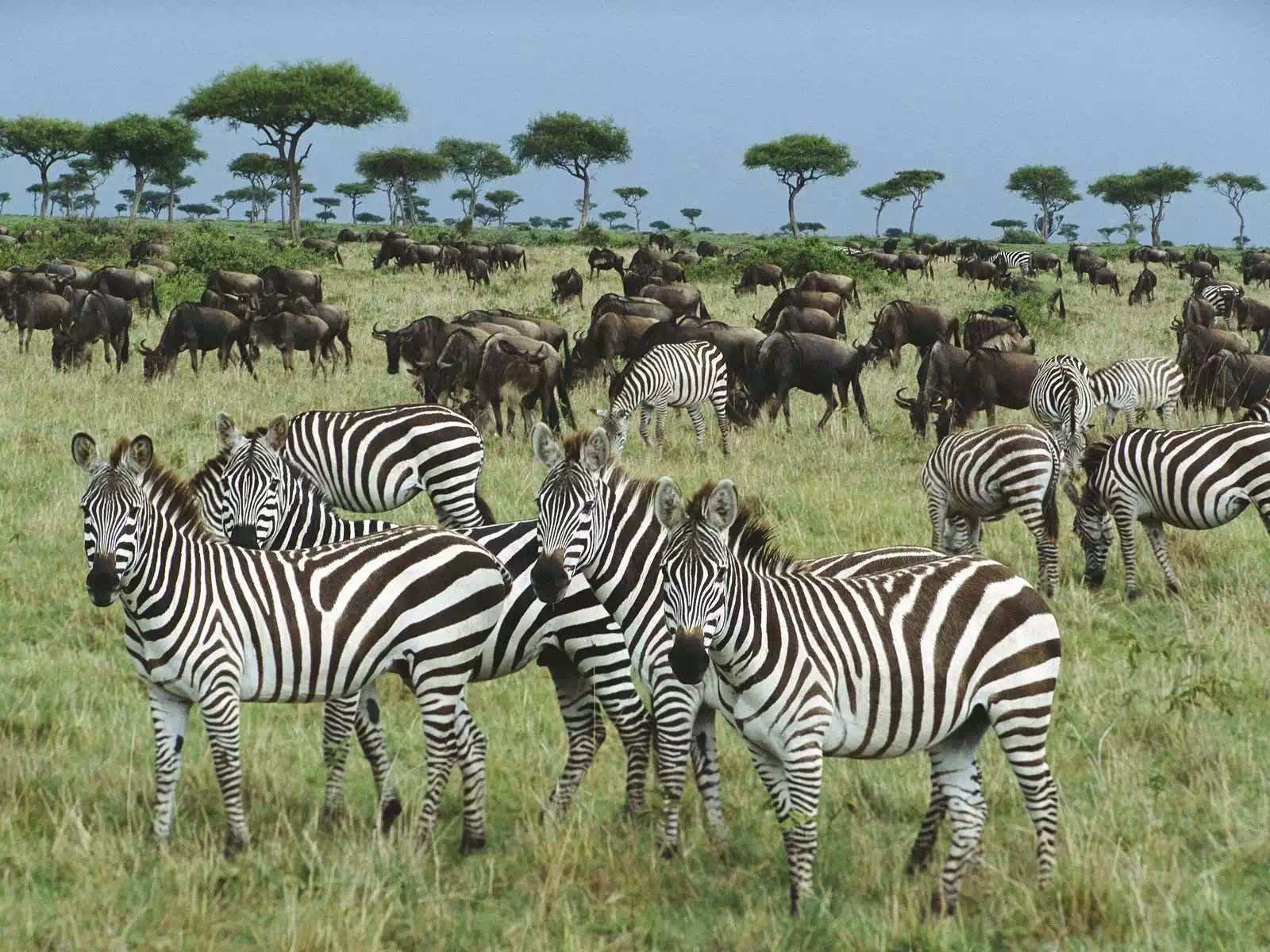
Zebras are a common sight on the plains of Kenya, particularly within its vast savannas and national parks such as Maasai Mara, Amboseli, and Tsavo. These iconic animals are well-adapted to the diverse environments of Kenya, ranging from grasslands to wooded areas.
Types of Zebras in Kenya:
Plains Zebra (Equus quagga):
Most common in Kenya: Often seen in large herds, the plains zebra is the most widespread zebra species. Their stripes are wide and vary from individual to individual.
Habitat: Prefers open grasslands and savannas, where they can graze on a variety of grasses.
Social structure: They form large herds that can include thousands of individuals, often mingling with other herbivores like wildebeests and antelopes.
Grevy's Zebra (Equus grevyi):
Rarer and more endangered: This species is more solitary and less commonly seen than the plains zebra. It is characterized by narrower stripes and a white underbelly.
Habitat: Found in the more arid regions of northern Kenya, such as Samburu and Isiolo.
Social structure: Typically seen in smaller groups, Grevy's zebras are more independent, with less rigid social bonds.
Behavior and Ecology:
Diet: Zebras are primarily grazers, feeding on a variety of grasses. They are known to travel great distances in search of fresh grazing lands, particularly during the dry season.
Predators: Zebras are preyed upon by lions, hyenas, and cheetahs. Their stripes, which serve as a form of camouflage, help disrupt the outline of their bodies, making it harder for predators to single out an individual.
Migration: In regions like the Maasai Mara, plains zebras are a significant part of the Great Migration, where they, along with wildebeests, migrate in search of water and greener pastures. This migration is one of the most spectacular wildlife events in the world.
Conservation:
Grevy's zebra: Listed as endangered, efforts are ongoing in Kenya to protect this species through habitat conservation and anti-poaching measures.
Plains zebra: While not endangered, the plains zebra still faces threats from habitat loss and human-wildlife conflict.
Cultural Significance:
Zebras hold a special place in Kenyan culture, often symbolizing the wild beauty of the country’s landscapes. They are a favorite among tourists and photographers, contributing significantly to Kenya's wildlife tourism industry.
The sight of zebras grazing or galloping across the Kenyan plains against the backdrop of a setting sun is a quintessential African experience. |