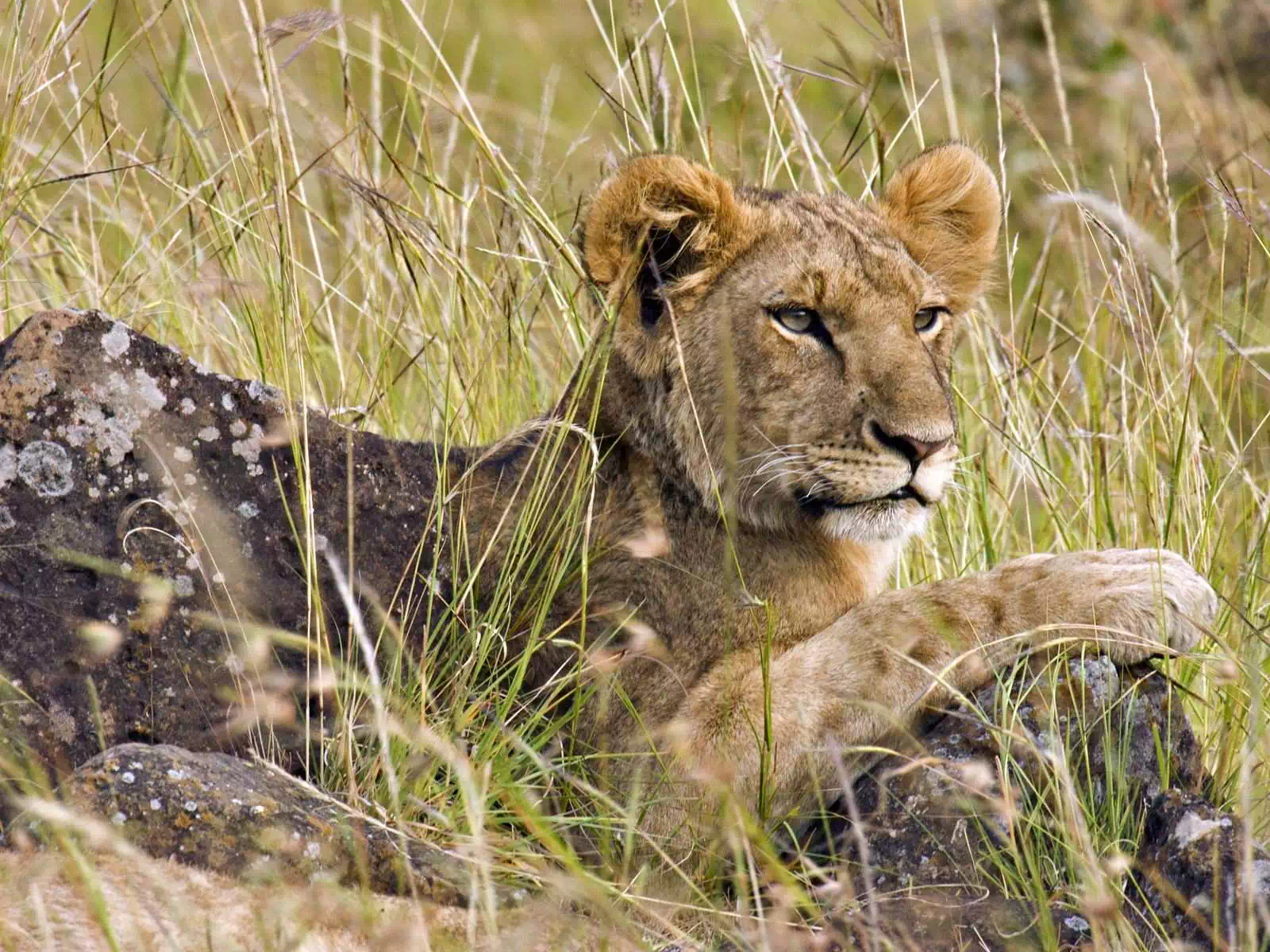
The life of a male lion cub in the Maasai Mara, a renowned wildlife reserve in Kenya, is both fascinating and challenging. From birth to adulthood, the journey of a lion cub is shaped by the environment, social structure, and survival instincts.
Birth and Early Life (0-3 months)
Birthplace: Lionesses typically give birth in a secluded den, often hidden in dense vegetation or rocky areas. A litter usually consists of 2-4 cubs.
Blind and Helpless: Lion cubs are born blind, weighing around 2-4 pounds (1-2 kg). They rely entirely on their mother for warmth, protection, and nutrition.
Weaning: The cubs start nursing immediately and continue to do so for about 6-7 months, although they begin to eat meat around 3 months old.
Growing Up (3-9 months)
Introduction to the Pride: Around 3 months, the mother introduces the cubs to the pride. This is a critical period where the cubs learn social behaviors and start interacting with other pride members, including adult males.
Play and Learning: Play among the cubs is essential for developing hunting skills, coordination, and strength. They engage in mock fights and stalking games.
Threats: Despite being in the pride, cubs face dangers from rival male lions, hyenas, and even buffaloes. The mortality rate is high, with only about 50% of cubs surviving their first year.
Adolescence (1-2 years)
Stronger and More Independent: As the cubs grow, they start participating in hunts, learning from the lionesses. They still rely on the pride for food, often feeding on the scraps left by adults.
Bond with Siblings: Male cubs form strong bonds with their siblings. These bonds are crucial later in life when they are forced to leave the pride.
Potential Threats: Rival males may attempt to take over the pride, leading to infanticide. To protect the cubs, lionesses will sometimes leave the pride temporarily.
Sub-adulthood (2-3 years)
Leaving the Pride: Around 2-3 years of age, male lions are driven out of the pride by the dominant males. This expulsion marks the beginning of a nomadic phase.
Life of Nomadism: The young males often roam in small coalitions with other expelled males, usually their brothers. They learn to hunt independently, which is a tough transition.
Survival: Life is precarious during this phase. They face competition from other lions, and without the protection of a pride, they are more vulnerable to injuries and starvation.
Adulthood (3-5 years)
Establishing Dominance: Around 4-5 years old, male lions reach full maturity. They are now strong enough to challenge older males for control of a pride.
Forming Coalitions: Most successful males operate in coalitions, often with brothers or close companions. Together, they attempt to take over a pride by defeating the resident males.
Reproduction: Once they take over a pride, the new males will typically kill any existing cubs (infanticide) to bring the lionesses into estrus, ensuring that their own genes are passed on.
Old Age (10+ years)
Decline: By around 10-12 years, male lions start to decline. They lose their strength and are often ousted by younger, stronger males.
Solitude and Death: After losing their pride, old males often lead solitary lives. They may survive for a few more years if they are able to scavenge or occasionally hunt. Eventually, they succumb to injuries, starvation, or other predators.
In summary, the life of a male lion cub in the Maasai Mara is a constant battle for survival. From a vulnerable cub relying on its mother, through the challenges of nomadic life, to the fierce battles for dominance, every stage is marked by intense competition and the struggle to thrive in a wild and unforgiving environment. |