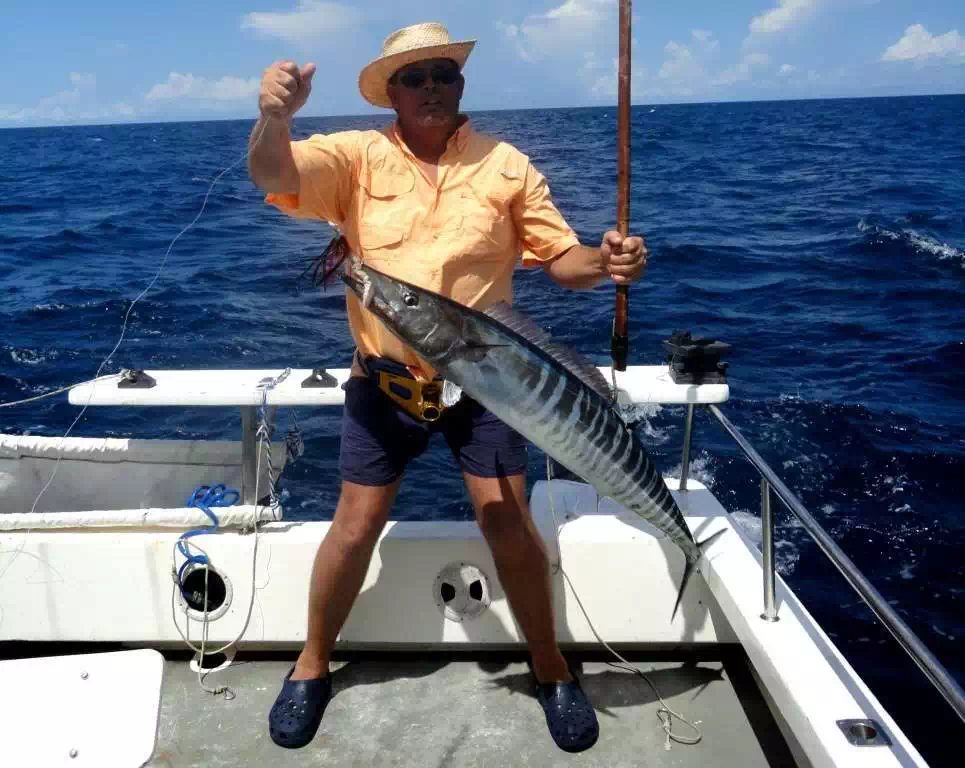
Wahoo fishing in Mombasa, Kenya, is an exciting experience for anglers, especially given the rich marine environment along the Kenyan coast. Mombasa, with its access to the warm waters of the Indian Ocean, offers some of the best deep-sea fishing opportunities, and wahoo is one of the prized catches among other game fish.
About Wahoo Fish
Species: The wahoo (scientific name Acanthocybium solandri) is a fast-swimming pelagic fish found in tropical and subtropical waters. It's known for its speed, sharp teeth, and firm, delicious flesh, making it highly sought after by sport fishermen.
Characteristics: Wahoos are torpedo-shaped and can grow up to 2.5 meters (8 feet) in length, weighing up to 45 kg (100 lbs) or more. They are distinguished by their elongated body, sharp pointed snout, and striking vertical blue stripes on their metallic blue backs.
Best Time for Wahoo Fishing in Mombasa
Season: The best time for wahoo fishing in Mombasa is typically from October to April, coinciding with the warmer months and the arrival of migratory fish species. However, wahoo can sometimes be caught year-round depending on the ocean currents.
During this period, wahoo are commonly found near the continental shelf and deeper waters off the coast, where they hunt for smaller fish like sardines and mackerel.
Fishing Locations Around Mombasa
Watamu and Malindi: These fishing grounds are well-known for deep-sea fishing, located about 1.5 to 2 hours north of Mombasa. They are part of the Kenyan North Coast and are famous for being among the best fishing spots on the East African coast. Many fishing charters operate from this area, offering trips to prime wahoo fishing zones.
South Coast – Diani: Closer to Mombasa, the waters off the South Coast near Diani Beach are another great spot for wahoo fishing. The deep waters in this region provide ideal conditions for catching a variety of big game fish, including wahoo.
Pemba Channel: Just south of Mombasa, this is one of the most famous deep-sea fishing channels on the East African coast, located between Kenya and Tanzania. The Pemba Channel is known for its prolific fishing of wahoo, marlin, sailfish, and tuna.
Fishing Techniques for Wahoo
Trolling: Trolling is the most common method used to catch wahoo in Mombasa. This involves pulling lures or bait behind a moving boat. Since wahoo are extremely fast swimmers, lures need to be trolled at relatively high speeds (up to 14 knots). Brightly colored lures or spoons that imitate smaller fish are effective for attracting wahoo.
Live Baiting: Using live bait such as small tuna or mackerel is also a popular technique. Wahoo are aggressive predators, and they are known to strike at live bait with force. These fish are particularly attracted to bait that moves quickly in the water.
Jigging: Jigging can also be effective for catching wahoo, especially near deeper water structures or drop-offs. Metal jigs dropped to deeper waters and retrieved quickly can entice a strike.
Fishing Charters in Mombasa
Several companies in Mombasa offer deep-sea fishing charters, providing anglers with boats, experienced skippers, fishing gear, and equipment. Most charters offer full-day and half-day trips, and some specialize in wahoo fishing along with other big game fish. Here are some of the key details to expect from a fishing charter:
Duration: Typically, fishing trips range from 4-hour half-day trips to 8-hour full-day trips. Full-day trips often venture farther out into deep waters where the likelihood of catching larger wahoo is higher.
Equipment: Boats are generally equipped with modern fish-finding technology, rods, reels, lures, and all the necessary gear.
Guides: Experienced skippers and fishing guides who know the best spots are usually included in the package.
Cost: Depending on the length of the trip, group size, and services provided, prices can range from $400 to $1,000 or more for private charters.
Some popular fishing charter companies in Mombasa include:
Jahazi Marine Charters
Mombasa Game Fishing
Pemba Channel Fishing Club
Tamarind Dhow (known for providing a mix of fishing and leisurely trips along the coast)
What to Expect on a Wahoo Fishing Trip
Departure: Most charters depart early in the morning, often around 6 AM, to take advantage of the early morning fish activity.
Onboard Comfort: Fishing boats are usually equipped with basic amenities like seating, shade, refreshments, and safety gear. Some larger boats have restrooms and cabins for longer trips.
Catches: While wahoo is the main target, you may also catch tuna, barracuda, kingfish, dorado (mahi-mahi), sailfish, and even marlin, depending on the season.
Preparation of Catch: Most charters allow you to keep the fish you catch, and some even offer to clean and prepare the fish for you. If you’re staying in a hotel, you can have the chef cook your fresh catch for dinner!
Regulations and Sustainability
Kenya has regulations in place to ensure that fishing remains sustainable and that marine ecosystems are protected. Most fishing charters in Mombasa follow these guidelines, especially for catch-and-release policies for certain species like marlin and sailfish. Wahoo, being a prized eating fish, is often kept for consumption.
Conclusion
Wahoo fishing in Mombasa offers an exhilarating experience for anglers looking to catch one of the fastest fish in the ocean. The combination of Mombasa's warm tropical waters, abundant marine life, and professional fishing charters ensures that both novice and experienced fishermen can enjoy a successful fishing trip. Whether you’re after a big catch or just looking to enjoy the ocean's beauty, wahoo fishing on the Kenyan coast is an adventure not to be missed. |