Why Albania Is Popular for Holidays and Resorts
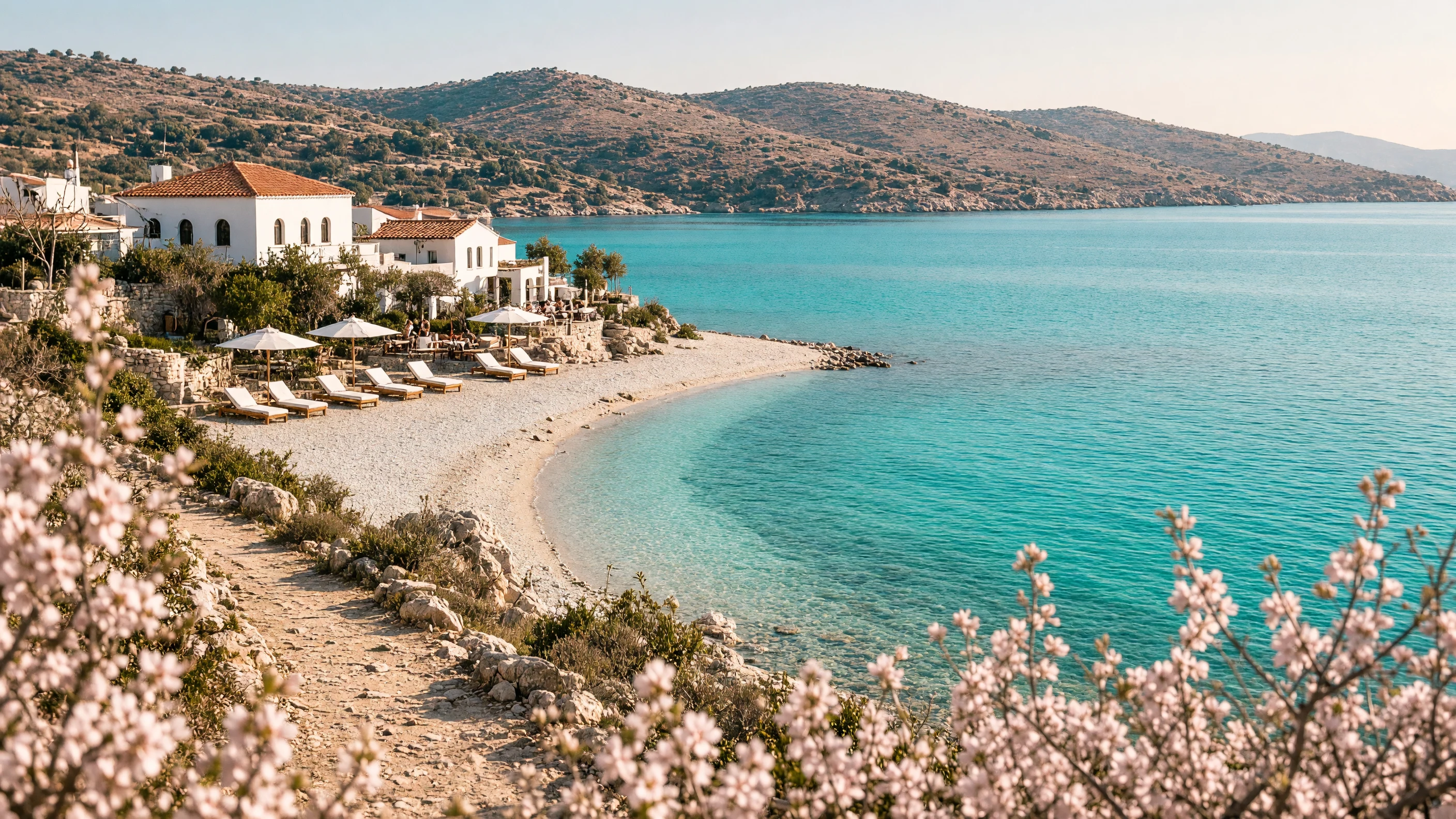
Albania has about 450 kilometres of coastline, and until roughly fifteen years ago most of it had no resort hotels on it at all. That's the short answer to why Albania is popular for holidays and resorts now: there was space to build, and the building happened quickly. You can fly into Tirana, collect a small hire car, and be sitting on a pebbly beach near Vlorë in under three hours. Try doing that from most European capitals and the arithmetic doesn't work as neatly.
The coastline splits into two halves with quite different characters. North of Vlorë, the Adriatic side is shallow and family-friendly, with wide bays and a long flat run of sand at Golem and Durrës that fills up through July and August. South of Vlorë, the road twists up over the Llogara Pass and the water turns an unnerving shade of blue. That southern stretch, the Albanian Riviera, is where most of the resort development has clustered.
Resorts, hotels and the Albanian Riviera
You'll find the density of new hotels between Himarë and Ksamil, a run of about sixty kilometres. Ksamil itself is a small peninsula with three or four sandy coves and water clear enough to see the bottom at four metres. Large resort complexes have gone up along that strip, alongside family-run guesthouses charging €40 a night for a room with a balcony. Both ends of the market sit on the same beach. Check out our reviews of the top hotel resorts in Albania
What surprises people is the price. A double room in a decent four-star hotel in Sarandë in early June costs somewhere between €60 and €90, breakfast included. The same standard in Corfu, visible across the strait on a clear day, runs two to three times that. Food is cheaper still: a plate of grilled sea bream with a salad and a glass of local wine lands around €15 in a beachfront restaurant. You don't have to hunt for value. It's the default.
Sarandë is the biggest resort town in the south, with a promenade, a working harbour and ferries to Corfu that take 30 minutes. It's busy and a bit scruffy in places, and the pebble beach in the centre gets crowded by mid-morning in August. Head ten minutes north to the beaches at Ksamil or south towards Borsh and the crowds thin out considerably.
Why Albania is popular for holidays and resorts beyond the beach
The country packs a lot into a small distance. From Sarandë you can drive to the UNESCO site at Butrint in twenty minutes, where a Roman theatre, a Byzantine basilica and a Venetian tower sit within a few hundred metres of each other, shaded by fig trees and mostly free of queues. Further north, Berat and Gjirokastër are both UNESCO-listed Ottoman towns of stacked stone houses, and neither takes more than a day to explore properly.
You can add a mountain day to a beach holiday without much effort. The Ceraunian mountains rise straight up behind the coast road, and the views from the Llogara Pass at 1,000 metres are worth the hairpin bends. Bring a jacket, even in July; the temperature drops noticeably once you're up there. I'd allow a full morning for the drive if you want to stop at the viewpoints, which you will.
Then there's the food, which has more in common with Greece and Turkey than most visitors expect. Lamb baked with yoghurt, stuffed peppers, byrek pastries sold from counters for the equivalent of 80p, and seafood grilled with nothing but olive oil and lemon. Breakfast at a guesthouse usually means figs, honey, warm bread and strong coffee. You won't go hungry and you won't spend much.
What to expect from the beaches
Not every beach is sand. Much of the Riviera is pebble or shingle, so bring shoes for the water; the payoff is clarity. Gjipe, reached by a 25-minute walk down a track from the main road, has a canyon behind it and no development at all. It's one of the best beaches in the country and it has a car park that fills by ten in the morning.
Beach clubs have taken over stretches of the sand at Ksamil and Dhërmi. A sunbed and umbrella typically costs €10 to €15 for the day, though you can usually find a free patch of public beach nearby if you look. I'd check whether the sunbed price includes a drink before you settle in, as some do and some don't.
Water temperatures reach 25°C by late July and stay swimmable into October. May and early June are quieter and cheaper, with the sea around 20°C. September is the sweet spot for most people: warm water, fewer crowds and hotel rates that have dropped back down.
Getting there and getting around
Tirana airport has direct flights from most of western Europe, and the drive south to Sarandë takes about four and a half hours on the new motorway as far as Fier, then a slower two-lane road through the mountains. It's a long transfer. Many visitors break the journey at Berat or Gjirokastër, which turns the drive into part of the holiday rather than an ordeal.
Car hire is cheap, from around €25 a day in low season, and it gives you the freedom to move between beaches. Driving in Albanian cities is chaotic and the mountain roads demand attention, but the main coastal route is fine. If you'd rather not drive, buses run along the coast between Sarandë, Himarë and Vlorë for a few euros, though the timetables are more of a suggestion than a schedule.
Ferries from Corfu and Bari bring in a steady stream of travellers, and the crossing from Corfu is short enough to make a day trip of it. It's a popular route and the ticket queues at the port can be slow. Book ahead if you're travelling in August.
When to go and what to budget
Peak season runs from mid-July to late August, when Albanian families from Tirana descend on the coast and hotel prices double. For a week in June or September, a couple can expect to spend around €800 including flights, accommodation, food and car hire. In August, budget closer to €1,400 for the same trip.
Book accommodation in Ksamil and Dhërmi two to three months ahead for July and August, as the good places fill early. The rest of the year you can turn up and find something.
The euro is widely accepted though the local currency, the lek, gets you a slightly better rate at restaurants. Cards work in hotels and supermarkets but many small beach bars are cash only. The only real inconvenience you'll run into is that ATMs along the southern coast can be out of service or empty, so carry more cash than you think you need.
Albania rewards a certain looseness of planning. Pick two or three bases, rent a car, and let the coast road dictate the pace. Most people who visit for a week wish they'd booked ten days.
The ferry from Sarandë to Corfu takes thirty minutes and the crossing costs about €25 return.
Further reading: Albanian Riviera on Wikipedia.