How to Choose the Right Holiday Cottage
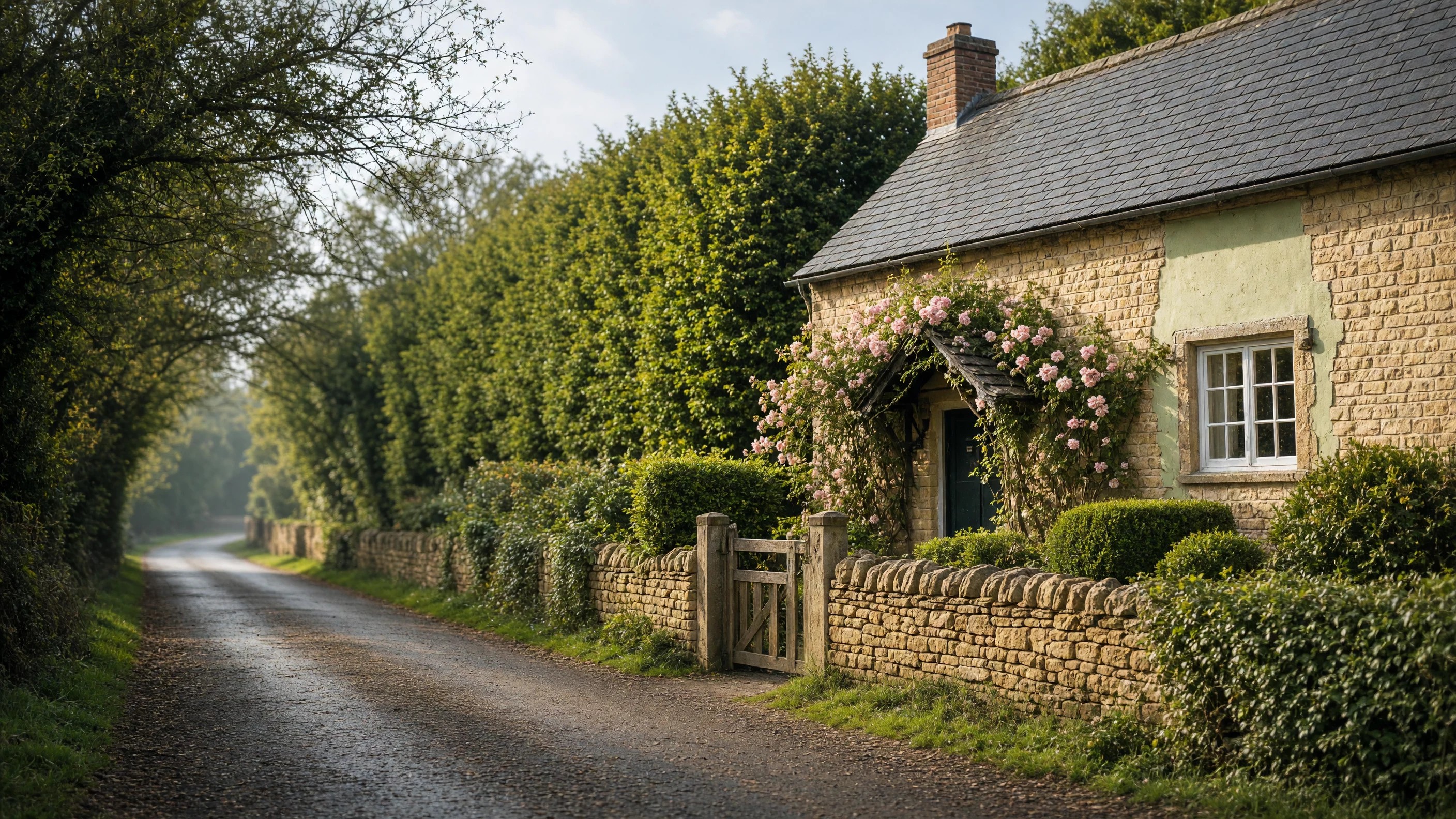
You start with the map, not the photographs. Spread an Ordnance Survey sheet on the kitchen table, find the village you've half decided on, and trace the lanes that lead out of it. The question of how to choose the right holiday cottage gets easier once you treat it as a piece of logistics rather than a daydream. A thatched roof above a stream is lovely in a listing. What matters more is whether the lane beside it floods in November, and whether the nearest shop is a twelve-minute walk or a forty-minute drive.
Pick your window first. School holidays, bank holiday weekends and the last fortnight of August push weekly rates up by sixty or seventy per cent in the popular parts of Cornwall, the Cotswolds and the Lake District, and the same cottage costs a third less in the second week of October. If your dates are fixed, work backwards from them. If they're flexible, let the price calendar do the deciding.
Read the access statement before the description
Cottage listings are written to sell the view. The access statement is written to keep the owner out of trouble, so it tends to be more truthful. Look for the number of steps to the front door, the width of the staircase, and whether the parking is a private space or a patch of grass beside a working farm gate. One couple I know booked a charming Dorset bolthole and discovered on arrival that the only route to the bedroom was a ladder. They stayed. They're still talking about it.
Bedrooms matter more than you'd think. Count them against the people going, then subtract one if anyone in the party snores, and check whether the beds are zip-and-link. A superking that splits into twins sounds versatile until you're the one doing the splitting at eleven at night with a duvet cover over your head.
Kitchen equipment is the quiet make-or-break. Photographs show a smeg fridge and a cafetière; they rarely show whether there's a decent knife or a roasting tin big enough for a chicken. Ask. Owners who cook will tell you exactly what's in the drawers, and owners who don't will answer vaguely, which is your answer.
Location: the mile you'll walk twice a day
Walk the route to the pub on the map, not the crow-flies distance. A cottage described as "a short stroll from the harbour" can mean a quarter of a mile down a steep lane with no pavement, which is fine in July and a genuine hazard in January with a torch. Google Street View will show you most of what you need, and satellite view will tell you whether the neighbouring field is pasture or a caravan park.
Think about what you actually do on holiday. If you want to walk from the door, you need footpaths within a hundred yards, not a ten-minute drive to a car park. If you plan to eat out every night, check that the village has more than one option, because the one pub in the village tends to close on Mondays and Tuesdays from October. If you're bringing a dog, confirm the garden is enclosed and that "dog-friendly" doesn't mean "tolerated on a lead in the yard."
Noise is the other thing the photographs hide. A cottage on a working farm is idyllic until the tractor starts at half five. A cottage on the main road through a village is cheaper for a reason. Look at the map, find the A-road, and decide whether the price difference is worth the early starts.
Book direct where you can
Booking platforms are convenient and they take a cut, usually somewhere between fifteen and twenty per cent, which either inflates the price or thins the owner's margin. Many cottages now have their own websites, and if you find one and ring the owner, you'll often get a better rate and a more honest conversation about the boiler, the broadband and the neighbours. Premier Cottages and the regional agencies like Classic Cottages in the South West or Cottages in Northumberland do the vetting for you, and their inspection standards are stricter than most listing sites.
Check the cancellation terms line by line. A deposit is usually non-refundable, and the balance is often due eight or ten weeks before you travel. Travel insurance that covers domestic cancellation is cheap and worth having if anyone in the party has a parent in their eighties.
How to choose the right holiday cottage for a group
Groups need a different checklist. A house that sleeps eight with one bathroom is a house that sleeps eight badly. Count the bathrooms, count the loos, and check whether the hot water is a tank or a combi boiler. A tank runs out after the third shower. A combi doesn't, but it takes an age to reach the tap in a long stone building.
Ask about the dining table. It sounds trivial until eight of you are eating off your knees in a room designed for six. Ask, too, about the sitting room: whether there's more than one, and whether the sofa arrangement allows for people who want to read in silence and people who want to play cards.
And ask about arrival and departure times. Some cottages run a Friday changeover, some a Saturday, and a few will flex. A four o'clock arrival and a ten o'clock departure can eat half a day of a short break.
The questions worth asking
Ring the owner and ask four things: what the broadband speed actually is, whether the heating is controllable, what the water pressure is like, and what they'd want to know if they were booking it themselves. The answers tell you more than any listing. An owner who says "the broadband is fine for emails but you won't stream a film" has just saved you an argument with a teenager.
Read the recent reviews, but read them for the complaints rather than the praise. A single mention of a damp patch in a corner tells you more than twenty five-star reviews that mention the welcome hamper. Look at the dates on the reviews, too: a property that was lovely in 2019 may have changed hands.
One family I know books the same cottage in the same week every year, and has done since 2011. They've never seen the inside of any other. That works, but it's a different kind of holiday, and it isn't the one most people are planning when they start scrolling on a Sunday evening.
Finally, book slightly better than you need. A cottage with a bit more space than the party requires, a garden that's bigger than the photographs suggest, a village with a second pub you didn't know about: these are the details that turn a good week into one you'll want to repeat. And if the weather turns, as it will, a decent woodburner and a full bookshelf will do more for the holiday than any view.
The owner of one cottage I stayed in last spring left a note on the kitchen table listing the best place to buy crab, the number of the man who repairs bikes, and the fact that the back gate sticks in wet weather. It was the most useful thing in the house.