Luxury Holidays in Mauritius: A Complete Guide
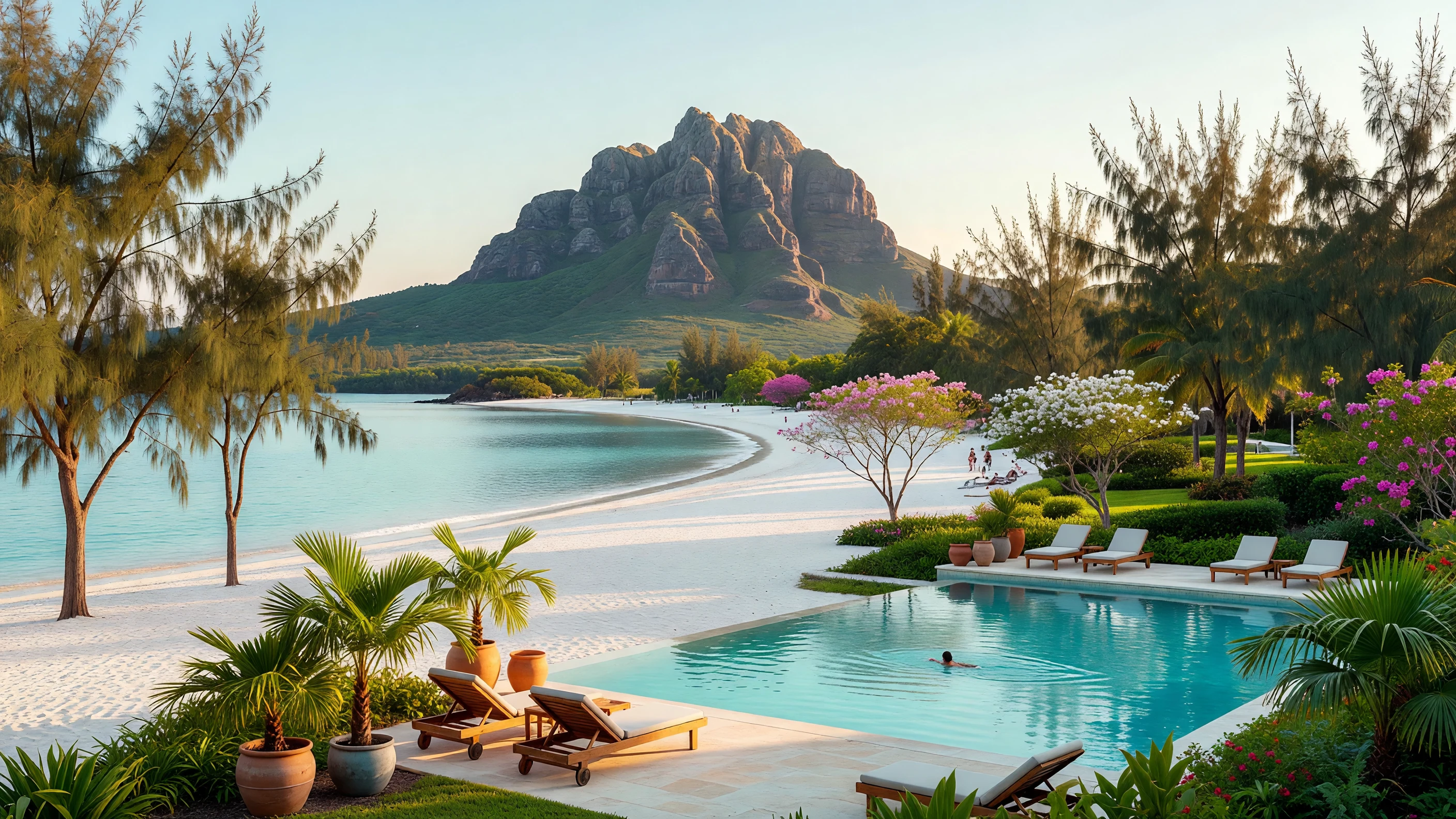
Mauritius sits about 2,000 kilometres off the southeast coast of Africa, and from the air it looks like a green rim around a turquoise plate. You land at SSR International in the southeast, and within forty minutes of clearing immigration you can be on a beach on the north coast with a cold drink in your hand. That ease is part of the appeal of this island, which measures about 65 kilometres across at its widest and never asks much of you in the way of travel. It's small enough that nowhere feels far, yet varied enough that a week never runs out of texture. This guide to luxury holidays in Mauritius assumes you'd rather spend your time well than simply spend it.
Choosing where to base yourself
The island divides into four coasts, and each has a different character. The north around Grand Baie is the busiest, with restaurants, boat trips and a shoreline that stays lively after dark. The west is drier, sunnier and framed by mountains, with the Black River Gorges behind it; the east is quieter, breezier and home to some of the longest stretches of white sand; the southwest around Le Morne is where the dramatic scenery lives. You won't go wrong on any of them, but you will have a different holiday depending on which you pick.
If you want still water and easy swimming, the west and north coasts are calmer for most of the year. The east catches the trade winds, which keeps things cooler and suits sailors, kitesurfers and anyone who finds a flat sea uninteresting. Families often gravitate to the north for the shorter transfer and the shallower lagoons. Honeymooners tend to drift east or southwest, where the resorts sit further apart and the evenings are quieter.
One practical note worth having in advance: the drive from the airport to the north can take ninety minutes in traffic, so if you're arriving on an evening flight, factor that in before you book the dinner reservation.
What luxury actually looks like here
Mauritius has been doing high-end hospitality for decades, and the standard is high across the board. The best properties tend to be low-rise, spread across generous gardens, with private villas or suites that open onto the sand. You'll find butler service, private pools, and restaurants with tasting menus that hold their own against anything in Europe. The service is what sets the island apart: warm, unhurried, and genuinely pleased to see you. It's a cliché to say so, but it's also true.
The resorts on the east coast tend to be larger and more spread out, with long private beaches and a heavy emphasis on watersports. The west has a handful of smaller, more intimate properties with mountain views and long sunsets. In the southwest, near Le Morne, you get a UNESCO-listed cultural landscape and a lagoon that shifts colour through the day. Wherever you stay, book a room with a terrace if you can, because the evenings are the best part of the day here.
Beaches, lagoons and the sea
The lagoon is the reason most people come. Mauritius is ringed by coral reef, which means calm, shallow, warm water for swimming, snorkelling and paddling, even when the open sea beyond the reef is choppy. The snorkelling is decent rather than world-class; you'll see parrotfish, sergeant majors and the occasional turtle, but serious divers should head further out to the passes and wrecks, where the drop-offs are more dramatic.
Belle Mare on the east coast has one of the longest, whitest stretches of sand on the island, backed by casuarina trees and largely free of crowds. Flic en Flac on the west is longer still, popular with locals at weekends, and good for a sunset walk. Le Morne beach, at the foot of the basalt mountain, is the one that ends up on postcards. Arrive early: by mid-morning the car park is full and the shade is gone.
Boat trips are easy to arrange and worth doing once. A catamaran to the northern islets, with a stop for snorkelling and a lunch of grilled fish, is a pleasant way to spend a day. You'll be offered the chance to swim with dolphins off Tamarin; the boats leave at dawn, and the experience is more crowded than the brochures suggest. It's still memorable, but go in with realistic expectations.
Beyond the beach
The interior is greener, steeper and cooler than the coast, and it rewards a day or two of exploring. The Black River Gorges National Park has well-marked trails through native forest, with viewpoints over the southwest coast and a chance to see the pink pigeon, a species brought back from the brink of extinction. The walk to the Gorges viewpoint is short and undemanding; the longer trails take four or five hours and are best done early, before the heat builds.
In the central plateau, the tea route winds through plantations and small villages, ending at a working tea factory where you can taste the island's own blend. Port Louis, the capital, is worth half a day: the central market for spices and textiles, the Blue Penny Museum for its famous stamps, and the waterfront for a coffee. It's a busy working city on weekday mornings.
Pamplemousses Botanical Garden, just north of the capital, has giant water lilies, a long avenue of palms and a resident population of fruit bats. Entry is inexpensive and the crowds are manageable on weekday mornings. Allow two hours, and take water.
Eating and drinking
Mauritian food is one of the island's quiet pleasures: a mix of Indian, Chinese, Creole and French influences that shows up in everything from street snacks to fine dining. You'll want to try dholl puri, a flatbread stuffed with yellow split peas and sold from roadside stalls for the price of a coffee, along with octopus curry and the fresh tuna that turns up on every menu. The resorts do excellent work, but the best meals are often in the small family-run restaurants along the coast roads.
Rum is the local spirit, and the distillery tours are worth an afternoon. The island's sugar cane goes into both agricultural rum and the aged, sipping kind, and the tasting rooms are generous. Wine is imported and priced accordingly, so expect restaurant mark-ups to be steeper than you're used to.
If you're staying half-board, check what's included before you arrive. Some resorts include drinks packages, others don't, and the difference over a week can be substantial.
When to go, and how long for
May to December is the dry, cooler season and the most comfortable time to visit. January to March is hotter, wetter and cyclone season, though many resorts offer attractive rates then. The island is busiest in July and August, when European families arrive; if you want quiet, aim for May, June or September. Sea temperatures stay swimmable year-round.
A week is the minimum I'd recommend. Ten days is better: long enough to settle into the rhythm, do a couple of excursions and still have lazy days. The flight from London is around twelve hours direct, so the first day is largely written off. Book nothing for that first day beyond dinner.
Practicalities
The local currency is the Mauritian rupee, though resorts often price in euros. Cards are widely accepted; carry some cash for markets and small restaurants. Tipping isn't obligatory but is appreciated, particularly for guides and drivers. English is widely spoken alongside French and Creole, and the island drives on the left, which surprises some visitors.
Pack light clothing, reef-safe sunscreen and a light layer for the evenings; the interior can be surprisingly cool. Insect repellent is worth bringing for the national park and for evenings near the lagoons.
On the one mild inconvenience front: the coastal roads are slow, and a 20-kilometre drive can take forty minutes if you hit the school run in a town.
Making it a proper luxury holiday in Mauritius
The difference between a good trip and a great one here usually comes down to planning, not spending. Booking a private transfer rather than relying on the hotel shuttle saves time; arranging a guide for the national park turns a walk into a proper introduction to the island's natural history; choosing the right coast for your temperament matters more than the star rating of your hotel. Get the days arranged so that nothing gets in the way of them, and the thread count of the sheets stops mattering.
Consider a split stay: three or four nights on the west coast for sunsets and mountains, then the remainder on the east for the beach. Resorts will usually arrange the transfer between them, and it gives you two different holidays in one. Book spa treatments and restaurant reservations before you travel; the best tables fill up in high season.
Finally, budget for the extras: a private catamaran day, a helicopter transfer to the capital, a guided hike. You won't regret any of them, and the island rewards curiosity in a way that a purely horizontal holiday doesn't. I'd caveat that: I haven't done the helicopter, so I can't vouch for the view, only the price list at reception.
The airport shop sells vanilla pods in glass tubes for around 400 rupees, which is cheaper than the duty-free at Gatwick.
Further reading: Mauritius on Wikipedia.