Exploring Holidays in Cape Verde | Sal & Beyond
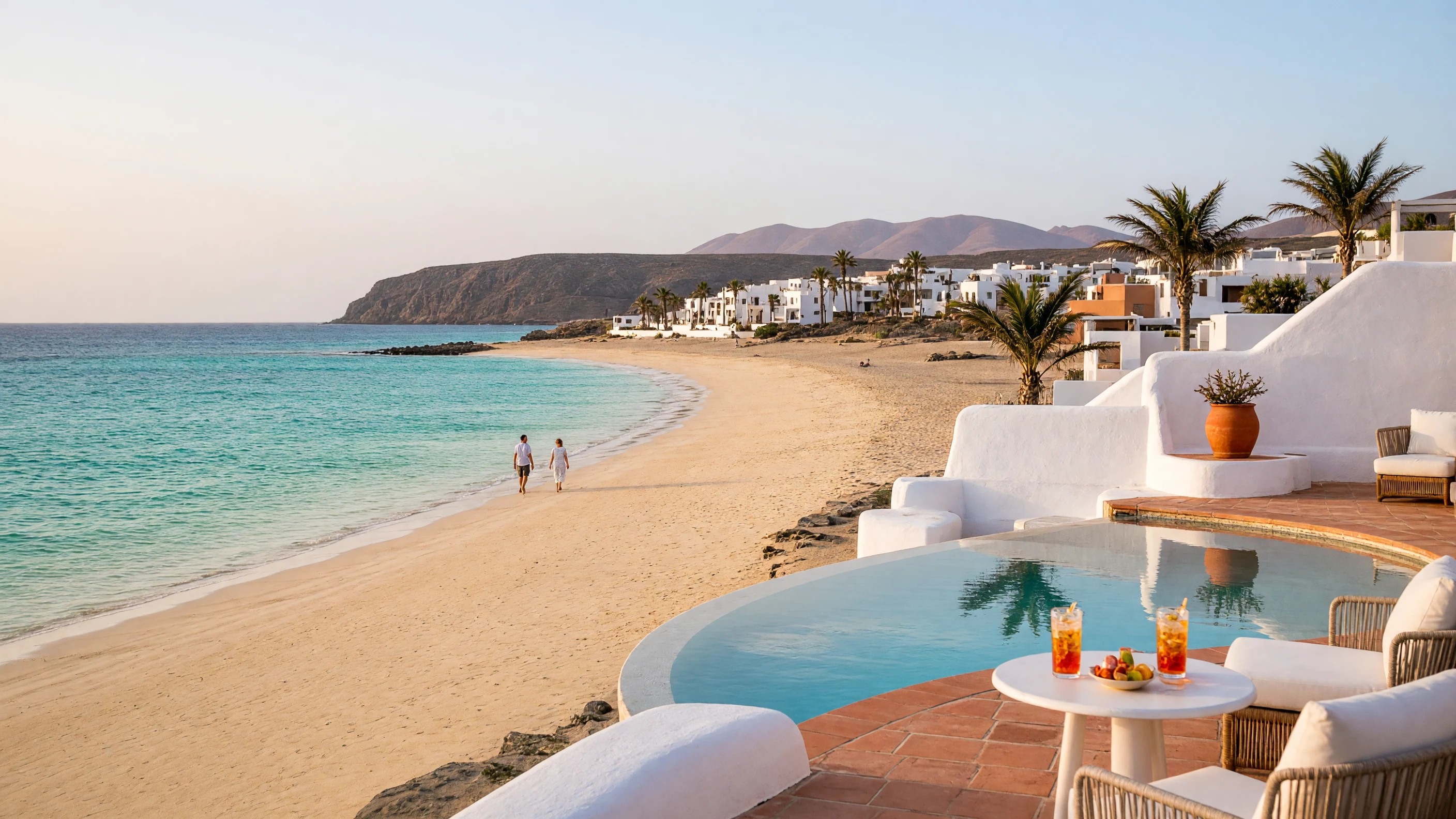
Cape Verde sits about 570 kilometres off the coast of Senegal, and you reach it on a direct flight of roughly six hours from London. Ten islands make up the archipelago, nine of them inhabited, and the wind that crosses them has a name: the northeast trades, which blow for most of the year and keep the temperature between 22°C and 28°C even in January. Exploring holidays in Cape Verde means getting to grips with a place that is neither Caribbean nor Canarian, though it borrows a little from both and answers to neither.
Sal is where most people land. The island is 30 kilometres long and flat enough that you can see the whole of it from the plane window on approach, a strip of sand and pale rock with a few white towns strung along the coast. You'd be forgiven for thinking that's all there is. It isn't, but Sal does one thing exceptionally well, and that thing is the beach at Santa Maria, which curves for several kilometres along the southwest shore and holds warm, shallow water for a good fifty metres out.
You'll want to swim there in the morning before the wind picks up. By two in the afternoon it's blowing hard enough to sand your ankles, and the kitesurfers take over the northern end of the bay in numbers that run into the hundreds during the winter season. Watching them is genuinely absorbing for about twenty minutes. After that, walk into town. Santa Maria's main street runs a couple of blocks back from the pier and holds a mix of restaurants, a small grocery, a pharmacy and a handful of shops selling beachwear and locally bottled grogue, the sugarcane spirit that Cape Verdeans drink with honey and lime. Expect to pay somewhere between four and seven euros for a glass of it in a bar. A bottle from the grocery costs less than a coffee back home.
Island hopping beyond Sal
You can fly between the islands, and the hops are short, twenty to forty minutes, but the schedules are thin and you'll lose half a day to the airport each time. The alternative is the inter-island ferry, which is cheaper, slower and considerably more interesting. The crossing from São Vicente to Santo Antão takes about an hour and lands you at Porto Novo, from where the road climbs 700 metres in fourteen kilometres to reach the plateau at Ribeira Grande. That road is one of the better afternoons you can spend in the Atlantic.
Santo Antão is the green one, the walking island, and you'll find the levada paths and the crater rim at Cova well signposted from the main villages. Bring proper shoes. The volcanic rock is sharp and the trails hold water long after rain. Paul, on the north coast, has terraces of banana and mango dropping down to the sea, and the valley floor at Vila das Pombas is a good base for two or three nights if you're happy to hire a driver rather than rent a car.
São Vicente is the cultural counterweight. Mindelo, its port town, has a musical reputation out of all proportion to its size: Cesária Évora was born here, and the bars around the harbour play morna and coladeira most evenings. You don't need to seek it out. Sit outside with a beer on a Friday and it arrives. The town also has a decent market, a colonial quarter that rewards an hour's wandering, and a lagoon beach at Laginha within walking distance of the centre, which is rare enough in an Atlantic port.
Boavista is the one people mention when they want somewhere quieter than Sal. It's mostly sand and dunes, with a long beach at Chaves that empties out past the first kilometre, and turtles nesting on the eastern shores between June and October if you're there in season and go with a licensed guide. Fogo is different again: a single volcano rising to 2,829 metres, coffee grown on its slopes, and a town, Chã das Caldeiras, built inside the crater where people farm and make wine from grapes that shouldn't really grow there. The last eruption was in 2014 and 2015, and the village has been rebuilt twice. Ask anyone there about it and they'll tell you plainly.
For the smaller islands, São Nicolau, Brava and Maio, you'll need patience and a willingness to accept that the ferry runs when it runs. Not every traveller wants that. If you have ten days and want to see four islands, pick Sal or Boavista for the beach, Santo Antão for the walking and São Vicente for the music, and fly the long legs. You'll get the variety without the waiting.
Where to stay, and what to eat
Where you stay shapes the trip more than you might expect. Sal and Boavista have the large resort hotels, all-inclusive, with pools and restaurants and shuttle buses to the beach. They're comfortable and they're convenient, and plenty of people never leave them, which is fine. But the guesthouses on Santo Antão and Fogo, family-run, six or eight rooms, breakfast of papaya and bread and strong coffee on a terrace, cost a fraction and put you in the middle of a village where the church bell still marks the day. Book those well ahead in the winter months, because there aren't many rooms and the walking crowd is loyal.
Food across the islands runs to fish, corn, beans and rice, with cachupa as the national dish: a slow-cooked stew of hominy, beans and whatever meat or sausage is around, served at breakfast in some households and as a main meal in others. Try the tuna steak, grilled with onion and pepper, and the pastries in Mindelo, which are better than they need to be. Vegetarians will eat well on the fruit and the vegetable soups, though the menus thin out on the smaller islands.
Currency is the Cape Verdean escudo, pegged to the euro at about 110 to the euro, and you'll get a better rate changing cash in Mindelo or Santa Maria than at the airport. Cards are accepted in hotels and larger restaurants and less so everywhere else, so carry cash. Tipping isn't expected but is appreciated: round up the bill, or leave five per cent.
Language is Portuguese on paper and Cape Verdean Creole in the mouth. English is spoken in the resorts and by most people under thirty in the towns, and less so in the villages. A handful of Creole phrases will get you further than you'd think, and people are generous about being corrected.
When to go? The dry season runs from November to July, and the trade winds keep the heat manageable. August and September bring the rains, which are short and heavy, and the harmattan can haze the sky in the early spring, softening the light and dropping visibility from the peaks. Christmas and New Year are the busiest weeks and prices climb accordingly, so late January and early May are the sweet spots: warm, quiet, and the water still holding at 24°C.
Getting around on the islands you do visit: on Sal, taxis are cheap and fixed-rate between Santa Maria and the airport. Elsewhere you'll want a car and driver for the mountain roads, or an aluguer, the shared minibus that runs set routes between towns and leaves when it's full. The aluguer is the cheapest way to travel and the slowest, and it's a fine way to spend an hour if you're not in a hurry. Don't be if you can help it.
One more thing worth knowing: the inter-island flight schedules change with the season, and a connection you booked in spring may move by several hours by the time you travel. Build a day of slack into the middle of the trip, not the end. Or take the ferry and let the timetable be someone else's problem.
Sal gets crowded in February. The wind is at its strongest and the kite schools are booked out, and the beach at Santa Maria has a queue for sunbeds by nine in the morning at the larger hotels. If that's not what you're after, Boavista in the same month is quieter by a wide margin, and the water is just as warm.
Prices vary by island. A double room in a good hotel on Sal in high season runs from 180 euros a night, half board, while the same money on Santo Antão gets you a guesthouse for four nights with breakfast and a packed lunch. A taxi across Sal costs 20 euros. A beer in a Mindelo bar costs a euro and a half.
What you won't get, and this is worth saying plainly, is the polished, manicured resort experience on every island. Sal and Boavista do it well. The others don't try. The roads on Santo Antão are steep and the guardrails intermittent, and if you're a nervous passenger you'll want to sit in the back and look at the view rather than the drop. The ferry between islands can be rough in the winter swell.
Cape Verde suits a certain kind of traveller: someone who wants the beach and the mountain in the same week, who doesn't mind a 5am start to catch the light on a crater rim, and who'll take a two-hour lunch because that's what's on offer. You can do it in ten days. You can do it in three weeks and still not see everything. The islands don't insist on either, and there's a great deal to be said for a place that doesn't chase you.
The airport at Sal has a small shop selling locally roasted coffee from Fogo, and the bags are stamped with the name of the cooperative that grew it.
Further reading: Cape Verde on Wikipedia.